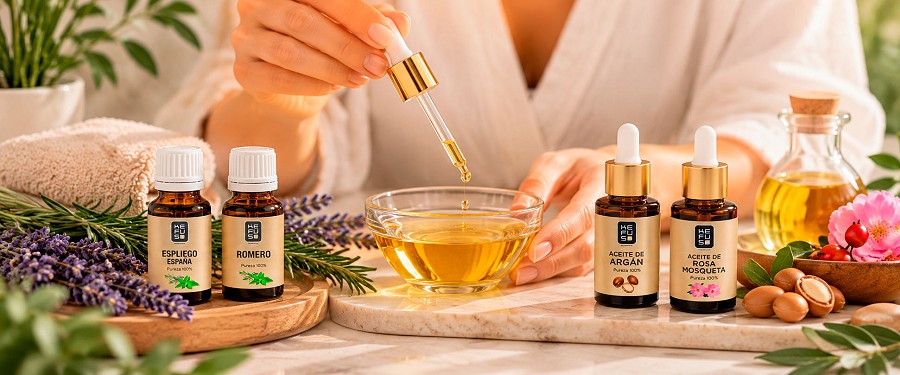

An essential oil and a vegetable oil do not serve the same purpose, although they are often mixed without taking that difference into account: the first is a highly concentrated extract, while the second can be applied directly to the skin. That is why combining them in the right ratio is what makes the difference between a blend that hydrates and soothes the skin and one that irritates it.
Why shouldn't you apply undiluted essential oil to the skin?
Essential oils are highly concentrated extracts, far more potent than the plant they come from, so applying them directly to the skin increases the risk of irritation or sensitisation. The answer is not to use less, but to always dilute them in a vegetable oil before they reach the skin. Dilution does not reduce their effectiveness: it simply allows the essential oil to work safely.
What ratio should you use to dilute essential oils?
There is no single figure that works in every case, but standard aromatherapy guidelines fall within similar ranges depending on the area of application:
|
Dilution |
10 mL |
30 mL |
50 mL |
|
Face, sensitive skin |
1 drop |
3 drops |
5 drops |
|
Face, daily use |
2 drops |
6 drops |
10 drops |
|
Body, daily use |
4 drops |
12 drops |
20 drops |
|
Occasional use, professional judgement |
6 drops |
18 drops |
30 drops |
For daily use on the face, the safest option is to stay at the lower end of that range, especially if it is the first time you are using a particular essential oil.
Can you mix several essential oils?
Yes. Combining two or three essential oils in the same blend, rather than just one, is common practice in aromatherapy. A classic, safe combination is spike lavender with rosemary, which is already available ready to use in some massage oils. The one rule that never changes is the total ratio: all the essential oils in the blend added together must stay within the same percentage you would use for a single oil, without adding extra drops just because you are using several essences at once.
How to choose the right vegetable oil as a carrier
Not all vegetable oils work equally well as a carrier for dilution. The lightest ones, such as almond or grapeseed oil, absorb quickly and suit almost any facial blend. Others, such as argan or avocado oil, have a slightly richer texture that is better suited to dry skin or body use. Our entire range of vegetable oils can be used as a carrier for dilution, as well as on their own when the skin does not need the added benefits of an essential oil.
Essential and vegetable oil combinations by use
There is no need to start from scratch every time: these combinations are a guideline starting point depending on what the blend will be used for, always respecting the appropriate dilution ratio.
|
Goal |
Essential oil |
Carrier vegetable oil |
|
Relaxing massage |
Spike lavender |
Sweet almond |
|
Sports or pre-workout massage |
Rosemary |
Argan |
|
Dry skin |
Orange |
Rosehip |
|
Daily facial routine |
Lemon |
Grapeseed |
|
Aromatic or sensory massage |
Cinnamon |
Sweet almond |
These combinations are a starting point, not a fixed formula: once you have mastered the dilution ratio, you can adjust the essential oils according to the scent or effect you are looking for in each session.
Tips for getting the most out of essential oils in your routine
Once diluted, essential oils can be used in several ways:
- Add a few drops to the vegetable oil before a massage.
- Add them to your bath water for a more relaxing effect.
- Use a diffuser to explore the more sensory side of aromatherapy.
- During pregnancy, while breastfeeding or with young children, check with a professional first, as not all essential oils are suitable at these stages.
Common mistakes when combining essential and vegetable oils
Most problems with essential oils do not come from the oil itself, but from how it is used:
- Applying undiluted essential oil, without first diluting it in a vegetable oil.
- Using the same ratio on the face as on the body, without adjusting it for the more sensitive area.
- Storing oils near heat or direct light, which speeds up their degradation.
- Skipping the patch test on a small area of skin before using a new essential oil.
- Applying citrus oils, such as orange or lemon, before sun exposure, because of their photosensitising effect.
Combining both is what makes the difference
An essential oil properly diluted in the right vegetable carrier offers far more than either one on its own. Taking a moment to choose that combination carefully, rather than mixing by eye, is what separates a safe aromatherapy routine from an improvised one.
