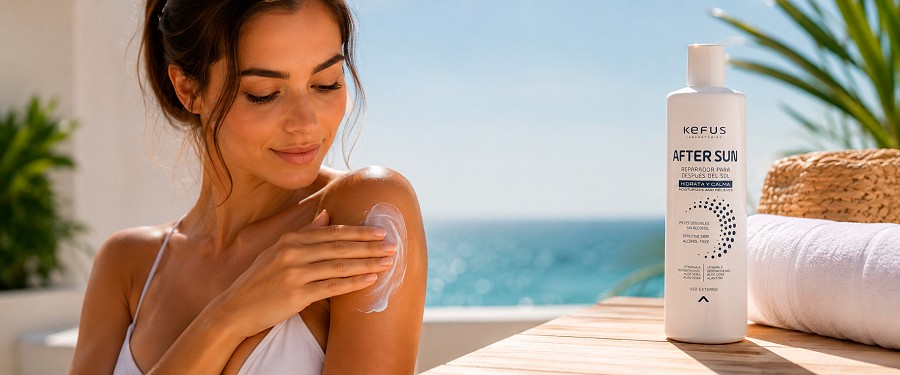

Applying an after sun when you return from the beach or the pool is as important as having protected yourself before going out in the sun. The skin, even if it has not been burned, ends the day dehydrated and sensitive, and needs specific care to recover well before this wear and tear is noticeable in the form of dryness or spots.
What happens to the skin after sunbathing?
Even if redness does not appear, the skin loses water through its most superficial layers and its protective barrier is temporarily weakened. Added to this is the accumulation of free radicals, related to premature aging, and a feeling of tightness that is aggravated if, in addition, there has been contact with chlorine or salt water. That is why after sun has a different function than sunscreen: it does not prevent damage, it helps repair it once it has already occurred.
Why apply it even if you haven't been burned?
Many people only resort to after sun when the skin is visibly red, but applying it every time there is prolonged sun exposure stops dehydration before it turns into peeling and helps the skin maintain its elasticity and luminosity for more days. Skipping this step does not cause immediate damage, but it does cause wear and tear that accumulates summer after summer, until it is noticeable in skin that is duller than usual.
The ingredients that make the difference
Aloe vera is, by far, the ingredient most associated with after sun: it calms redness and provides hydration almost instantly, which is why aloe vera gel can be applied alone or together with your usual cream when the skin asks for extra freshness. Panthenol and hyaluronic acid reinforce the repair of the skin barrier, while vitamin E helps stop the effect of free radicals accumulated during the day. When the skin is clearly red or with a slight burn, it is advisable to go one step further and resort to calamine from Kefus, a soothing and refreshing active ingredient designed precisely for those most affected areas. For the rest of the body, you can seal this hydration with a light texture such as rosehip body milk or hyperico oil body milk, both also available in 100 ml format, perfect to carry in your beach bag or store in the refrigerator for extra freshness.
How to apply after sun to notice the difference?
The routine doesn't have to be complicated to be effective:
- Rinse the skin with warm water, never hot, to remove salt, chlorine or traces of sun cream.
- Apply the After Sun Repairer to skin that is still slightly damp, to promote absorption.
- If there are reddened areas, reinforce with calamine before continuing with the usual moisturizing cream.
Repeating these steps every time there has been sun, and not just when a burn appears, is what makes the difference between skin that recovers well and one that accumulates damage as the summers pass.
Give your skin the care it deserves after every day in the sun
Caring for your skin does not end when you remove the sunscreen, but continues hours after exposure. Having a natural after sun on hand, with ingredients like aloe vera or calamine when the skin asks for it, is one of the easiest ways to reach the end of summer without that accumulated dryness that is so difficult to reverse later. If you want to start with the basics, the after sun repairer from Kefus is designed precisely for that: to accompany your skin every summer day.
